A doctor mentioning the word “MRI” is often enough to make anyone anxious. Is it serious? Is it necessary? Could a simple X-ray or blood test have done the job instead? These are fair questions, and the honest answer is that an MRI (Magnetic Resonance Imaging) scan isn’t recommended for every ache or worry — it’s recommended when doctors need to see soft tissue, nerves, or organs in a level of detail that no other scan can offer.
This guide walks you through the symptoms and situations where an MRI genuinely adds value, the red-flag signs that call for urgent imaging, and how the process works — so that the next time your doctor suggests one, you’ll know exactly why, and you’ll be able to book it without confusion or delay.
What Is an MRI Scan, and Why Is It Different?
Unlike an X-ray or CT scan, which use radiation to capture images, an MRI uses a strong magnetic field and radio waves to build highly detailed pictures of the inside of your body. This makes it especially good at visualising soft tissue — the brain, spinal cord, muscles, ligaments, cartilage, and internal organs — in a way that bone-focused imaging simply cannot match.
Because it involves no ionising radiation, an MRI is also considered one of the safer imaging options for repeated scans or for patients who need close monitoring over time.
Symptoms That Commonly Lead to an MRI Recommendation
Doctors don’t order MRIs randomly — they’re usually looking to confirm or rule out something specific. Below are the categories where an MRI is most frequently the right next step.
Neurological Symptoms
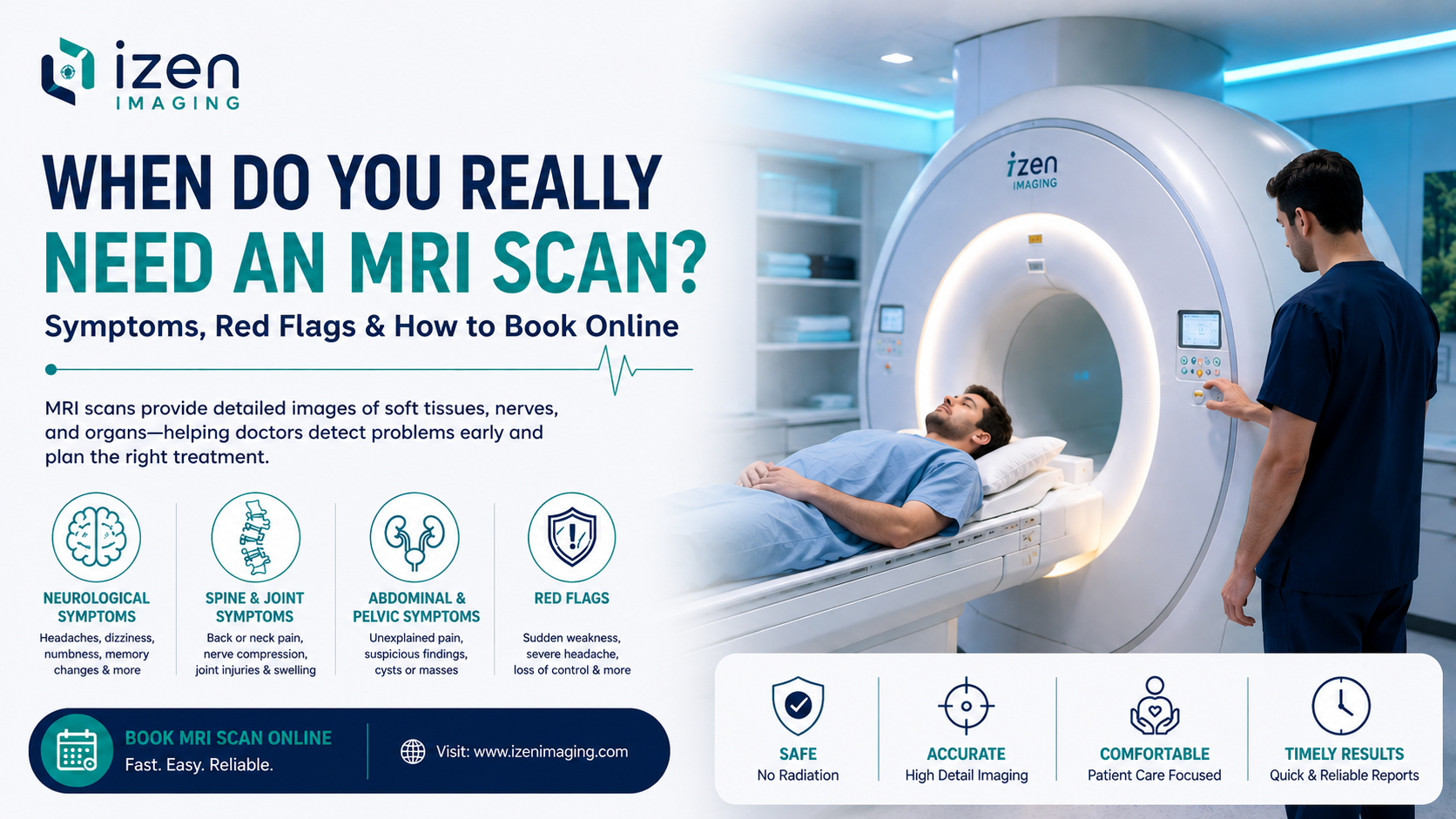
- Persistent or worsening headaches, especially new-onset headaches after age 50
- Unexplained dizziness, loss of balance, or fainting spells
- Numbness, tingling, or weakness in the arms or legs
- Memory changes, confusion, or unexplained seizures
- Vision or speech disturbances
Spine and Joint Symptoms
- Lower back or neck pain that hasn’t improved after 4–6 weeks of rest or physiotherapy
- Pain that radiates down an arm or leg (possible nerve compression)
- Knee, shoulder, or hip pain following an injury, or joint instability
- Swelling or reduced range of motion in a joint without a clear cause
Abdominal, Pelvic, and Other Symptoms
- Unexplained pelvic pain or abnormal findings on ultrasound that need further clarity
- Suspicious findings on a prior scan that need confirmation
- Monitoring of a known condition, cyst, or mass over time
Red Flags You Should Never Ignore
Most symptoms above build up gradually, and there’s usually time to consult a doctor first. But certain signs warrant urgent medical attention and imaging without delay:
- Sudden, severe “worst-ever” headache
- Sudden weakness or numbness on one side of the body, slurred speech, or facial drooping (possible stroke)
- Loss of bladder or bowel control along with back pain (possible cauda equina — a medical emergency)
- Progressive weakness or numbness that is spreading rather than improving
- A head injury followed by confusion, repeated vomiting, or loss of consciousness
MRI vs CT vs Ultrasound: Which One Do You Actually Need?
This is one of the most common points of confusion for patients, and understandably so — all three are described as “scans,” but they serve different purposes.
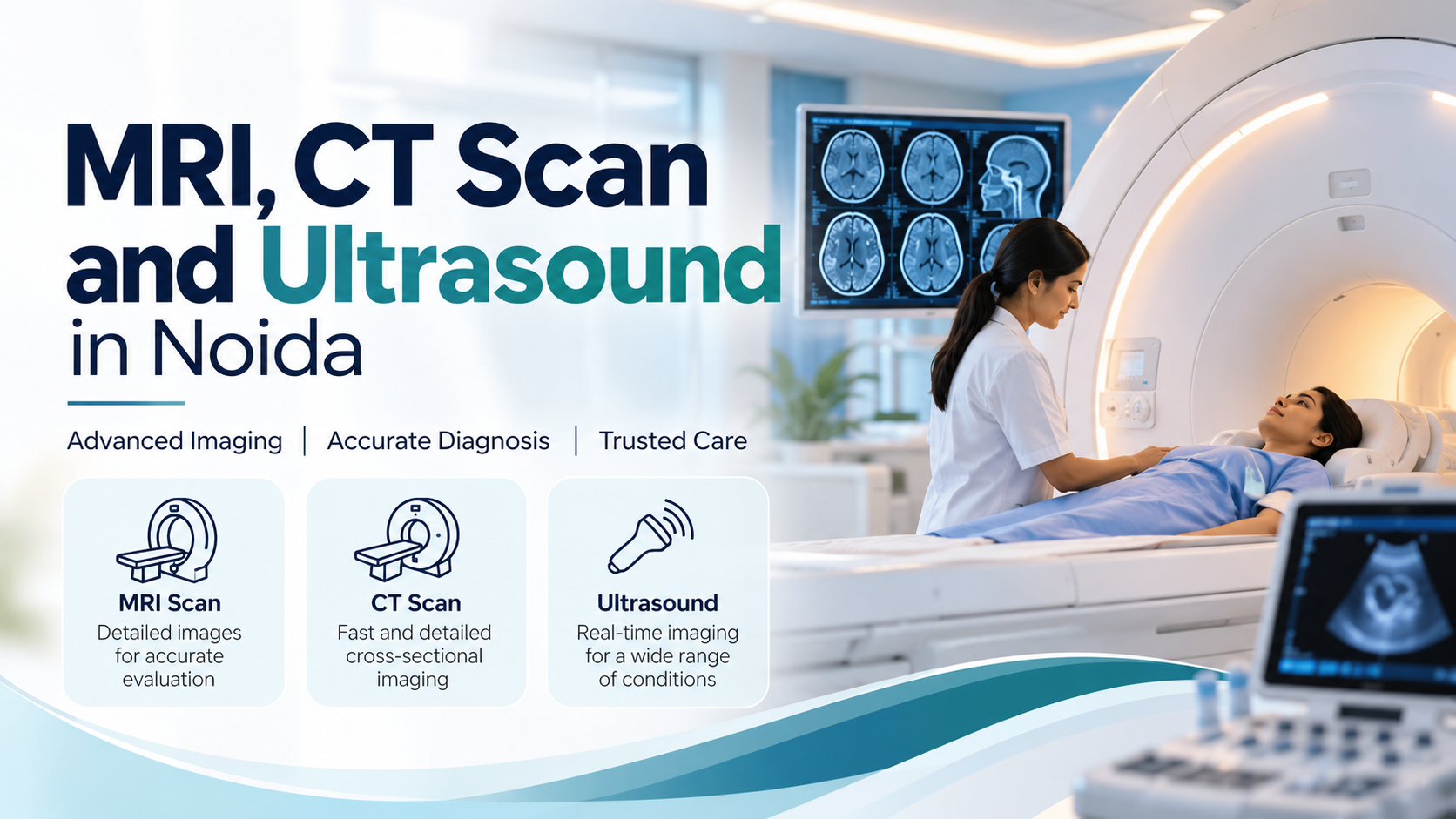
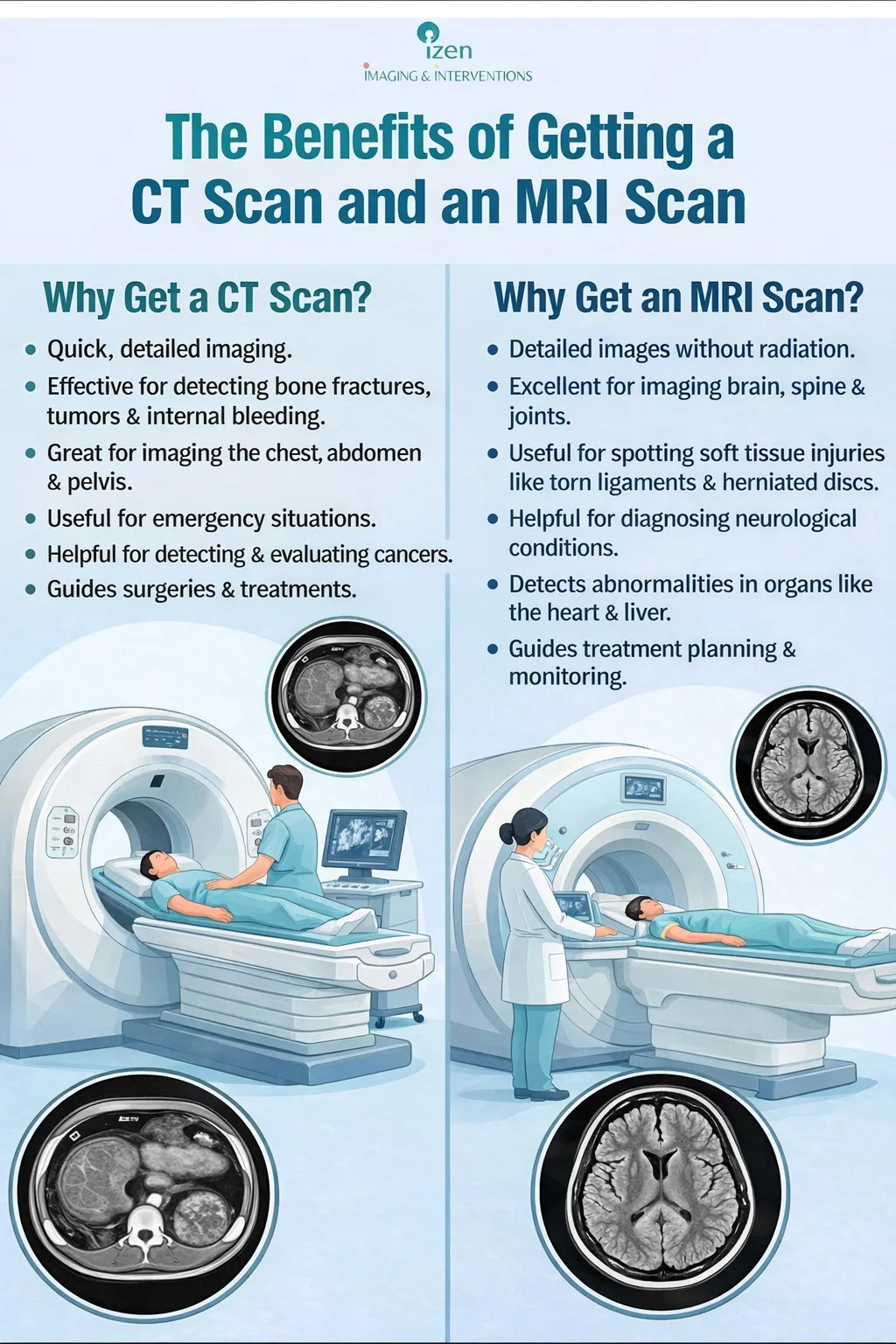
CT scans use X-rays and are faster, making them the first choice in emergencies, trauma, or when evaluating bone and acute bleeding. Ultrasound uses sound waves and works well for real-time imaging of organs, blood flow, and pregnancy monitoring, without radiation. MRI takes longer but offers the most detailed view of soft tissue — the brain, spinal cord, ligaments, and joints — which is why it’s usually recommended for chronic, neurological, or musculoskeletal concerns rather than acute emergencies.
The right test always depends on what your doctor is trying to evaluate, so the referral you’re given is usually already matched to your specific symptoms.
What Happens During an MRI Scan
An MRI is a non-invasive, painless procedure. You’ll lie on a padded table that slides into the scanner, and you’ll need to stay still while it captures images — this typically takes 20 to 45 minutes depending on the body part being examined. The machine makes loud knocking and humming sounds during scanning, which is completely normal; earplugs or headphones are usually provided for comfort. Some scans require a contrast dye, injected through a vein, to make certain structures more visible — your radiologist will let you know in advance if this applies to you.
MRI Isn’t Just for Serious Illness — Athletes Get Them Routinely
One reason people feel anxious about being told they need an MRI is the assumption that it only happens when something is seriously wrong. In reality, MRI is a routine diagnostic step for all kinds of injuries, not just alarming ones. In professional cricket, for instance, scans are a standard part of injury management — reports have documented players such as Deepak Chahar being sent for scans after a hamstring strain, Chris Lynn undergoing an MRI for a recurring shoulder issue, and Ishant Sharma being scanned for an ankle injury sustained during a domestic match, which the MRI confirmed as a ligament tear requiring weeks of rehabilitation.
None of these cases involved anything unusual or alarming — they’re simply how sports medicine teams identify the exact nature and severity of an injury before deciding on treatment. The same logic applies to your own MRI: it’s a tool for clarity, not a signal that something catastrophic is expected.
How to Prepare for Your MRI Appointment
- Inform the staff in advance about any implants, pacemakers, metal plates, or history of metal fragments in the body
- Wear comfortable clothing without metal zips, buttons, or hooks
- Follow any fasting instructions if your scan requires contrast
- Carry your doctor’s referral slip and any previous scan reports for comparison
- Let the technician know if you have claustrophobia, so they can guide you through the process comfortably
Why Patients in Noida Choose Izen Imaging for Their MRI
Izen Imaging and Interventions, located at Plot No. 3, Block WP, Sector 104, Noida, has been a trusted diagnostic name in the region, offering MRI, CT, Ultrasound, Digital X-Ray, and pathology services under one roof. The radiology team is led by Dr. Khushboo Pilania Agrawal, whose expertise spans MRI imaging, musculoskeletal and chest imaging, and interventional radiology, alongside Dr. Shilpa Saxena, a Consultant Radiologist with 14+ years of experience across ultrasound, CT, and MRI, with a special focus on women’s and fetal imaging.
As a NABH and NABL accredited centre, Izen Imaging combines modern MRI technology with careful patient screening and a genuinely patient-first, women-centric approach — so your scan is not just accurate, but also comfortable and stress-free.
How to Book Your MRI Online at Izen Imaging
Booking is simple: you can call ahead or use the online booking option on the Izen Imaging website to choose a convenient slot. Most MRI and CT reports are ready within 12 hours, and many routine reports are available the same day — helping your doctor start treatment sooner rather than later.
Key Takeaways
- An MRI is recommended for detailed soft-tissue evaluation, not routine screening — it’s typically ordered when symptoms are chronic, neurological, or unclear on other scans
- Sudden severe headache, one-sided weakness, or loss of bladder/bowel control are red flags that need immediate medical attention, not a scheduled appointment
- MRI, CT, and ultrasound each serve different purposes — the right one depends on what your doctor needs to evaluate
- The procedure is painless and non-invasive, typically taking 20–45 minutes
- Izen Imaging offers MRI scans starting at ₹4,999*, with reports typically ready within 12 hours
Frequently Asked Questions
Can I get an MRI without a doctor’s prescription?
While it’s always best to have a doctor’s referral so the right protocol is used, diagnostic centres like Izen Imaging can guide you on the appropriate scan even if you’re unsure — though a clinical evaluation first is strongly recommended for accurate results.
Is an MRI painful?
No. An MRI is completely painless. The only discomfort some patients report is from lying still for the duration of the scan or from the noise of the machine, both of which are manageable with proper guidance from the technologist.
How soon can I get my MRI report?
At Izen Imaging, MRI reports are typically available within 12 hours, with many routine scans reported the same day.
Is MRI safe for everyone?
MRI does not use radiation, making it safe for most patients, including those needing repeated scans. However, patients with certain implants, pacemakers, or metal in the body need to be screened carefully beforehand — always inform the staff of your full medical history.
How is an MRI different from a CT scan?
CT scans use X-rays and are faster, making them ideal for emergencies and bone imaging. MRI uses magnetic fields and offers superior detail for soft tissue like the brain, spinal cord, and joints, but takes longer to perform.
Book Your MRI at Izen Imaging, Noida
| Experiencing symptoms that need an MRI? Don’t wait and wonder.
Book your MRI scan at Izen Imaging and Interventions, Plot No. 3, Block WP, Sector 104, Noida – 201301. Call 9810057846 or book online at izenimaging.com. MRI scans start at ₹4,999*. NABH & NABL accredited | Reports within 12 hours | Experienced radiology team led by Dr. Khushboo Pilania Agrawal & Dr. Shilpa Saxena |