“You need an MRI” can mean a lot of different things depending on what your doctor is actually investigating. An MRI for a suspected fibroid looks nothing like an MRI for a fistula, and the two are prescribed for completely different reasons. If you’re in Sector 76, Noida, and trying to understand what type of MRI your doctor has actually recommended, Izen Imaging and Interventions in Hazipur offers a range of condition-specific MRI scans, each suited to a different diagnostic question.
Prescriptions don’t always spell this out clearly, and patients often arrive for a scan without fully understanding why that particular type was chosen over another. Knowing the difference can help you ask better questions, understand what the radiologist is actually looking for, and feel less in the dark about the whole process.
This guide walks through some of the most commonly prescribed MRI types, what each one is actually looking for, and why your doctor may have chosen that specific scan for your situation.
What Makes MRI Different from Other Scans?
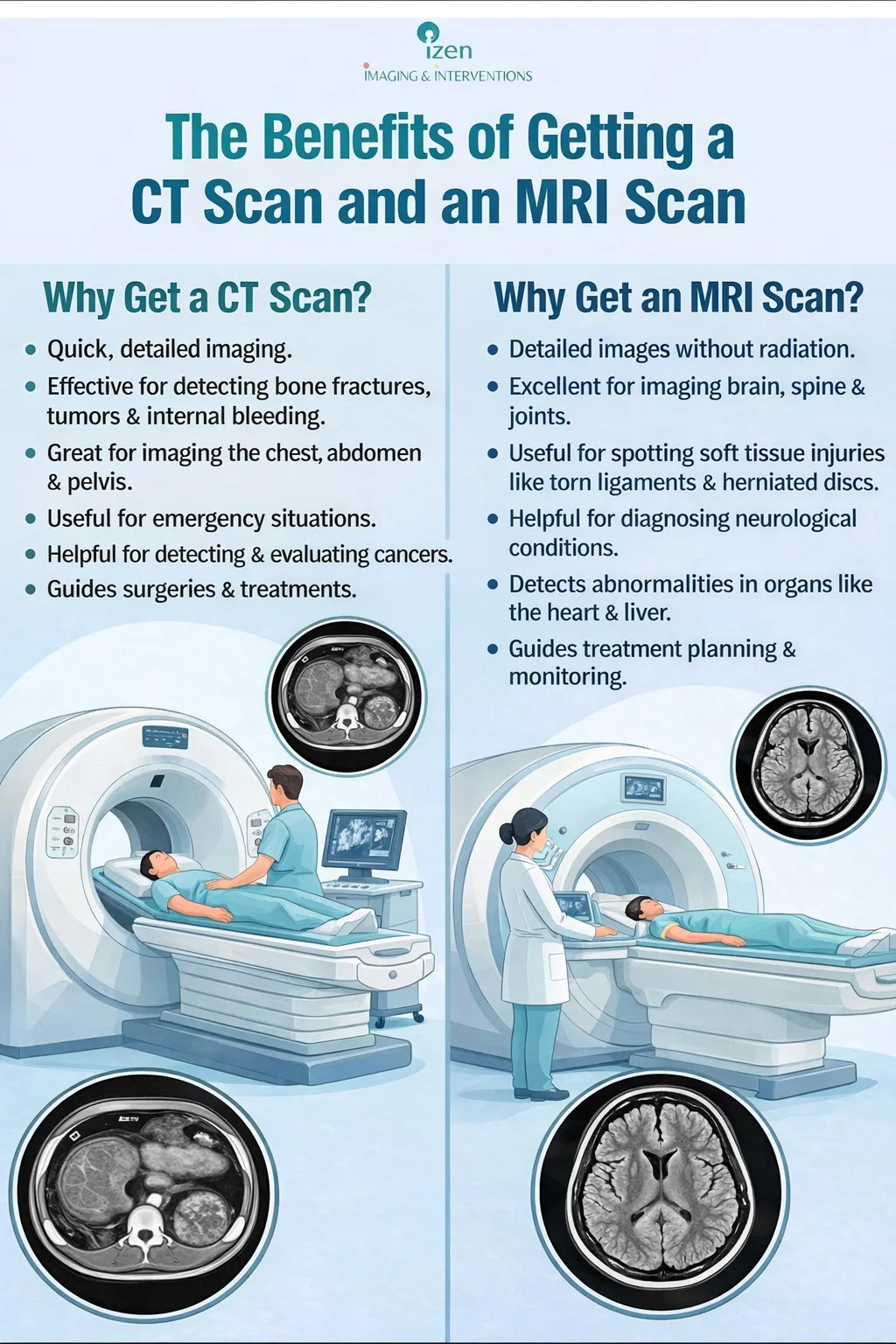
Magnetic Resonance Imaging (MRI) is a diagnostic tool that uses magnetic fields and radio waves to create detailed images of the body’s internal structures. Physicians often prescribe MRI scans when precise visualisation is needed to diagnose, monitor, or treat various medical conditions, from identifying brain abnormalities and spinal cord injuries to detecting tumours, joint problems, and cardiovascular issues.
Because MRI doesn’t rely on radiation, it’s often the imaging method of choice when a doctor needs a detailed, soft-tissue view of a specific area, or when a patient may need repeated scans to monitor a condition over time. What changes from case to case isn’t the underlying technology, but which part of the body is being examined and how the scan is set up to answer a specific clinical question.
Pelvic MRI
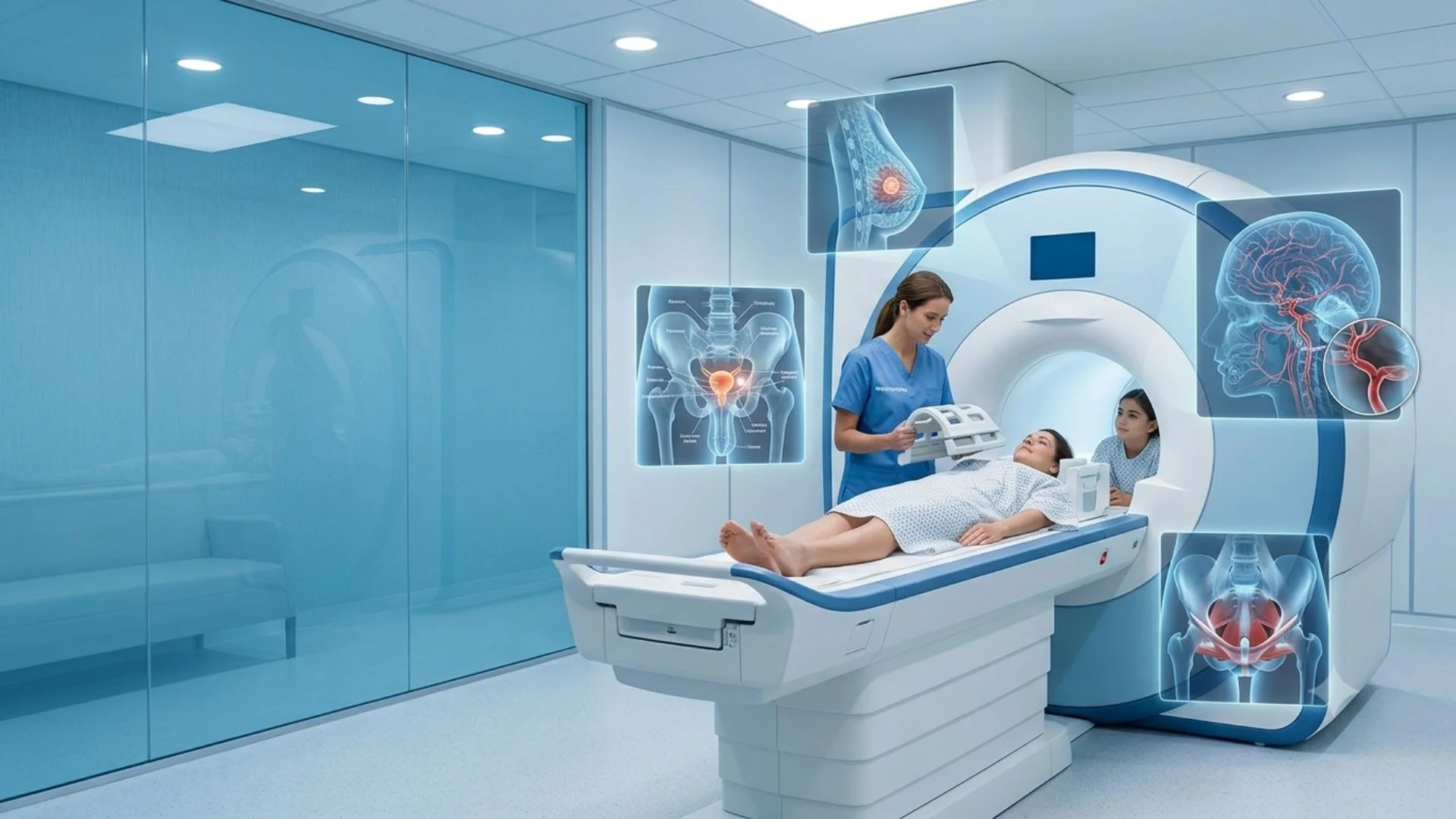
A pelvic MRI is often ordered to investigate issues involving the reproductive or urinary systems. Conditions like uterine fibroids, endometriosis, or prostate abnormalities are commonly assessed using this scan. It gives doctors a detailed, non-invasive look at the organs and tissues in the pelvic region, which is particularly useful when symptoms are unclear or when other tests haven’t provided enough detail to guide treatment.
Because the pelvic region houses several different organ systems, this type of MRI can be tailored depending on whether the primary concern is gynaecological, urological, or something else entirely, which is part of why your doctor’s referral details matter.
Breast MRI
A breast MRI is used for detailed imaging of breast tissue, particularly in high-risk patients or when mammograms are inconclusive. It helps in detecting small cancers or evaluating the extent of breast cancer, offering a level of soft-tissue detail that complements what a mammogram or ultrasound alone can show. This makes it a useful next step when a doctor needs more clarity before deciding on treatment.
Fistulogram MRI
A fistulogram MRI is a specialised scan for evaluating fistulas, such as those in the rectal or perianal area. It provides detailed images that help guide both treatment decisions and surgical planning, giving the treating doctor or surgeon a clear map of the fistula’s path before any procedure is carried out.
MR Angiography (MRA)
MR Angiography is used to examine blood vessels for aneurysms, blockages, or vascular malformations without the need for invasive procedures. Because it can visualise the circulatory system in detail without threading a catheter through the body, it’s often preferred when a doctor needs a clear picture of vascular health without exposing the patient to the risks of a more invasive angiogram.
Defecography MRI
Defecography MRI is a dynamic imaging technique used to assess pelvic floor disorders during defecation. It provides crucial insights for patients with chronic constipation or incontinence, capturing how the pelvic floor muscles and organs function during the process itself, rather than relying on a single static image.
Why the Specific Type of MRI Matters
Each of these scans is set up differently — the positioning, the sequences used, and sometimes the use of contrast all depend on exactly what the doctor is trying to see. This is why an MRI prescription usually specifies the type of scan required rather than just “an MRI,” and why it’s worth confirming with your doctor or the diagnostic centre exactly which scan has been recommended before you book.
Getting the right scan the first time also means avoiding the delay and added cost of having to repeat imaging because the wrong protocol was used, which is part of why clear communication between your doctor and the imaging centre matters. If you’re ever unsure whether your prescription specifies the right scan for your symptoms, it’s always worth raising that question before the appointment rather than after.
What to Expect During Your MRI
Regardless of which type of MRI you’re booked in for, the general process is similar. You’ll be asked to remove all metallic objects, including jewellery, watches, hairpins, and hearing aids, and you’ll be given a gown to change into. You’ll then lie on a padded table that slides into the MRI machine, and depending on the body part being scanned, a specialised coil may be placed around or near the area of interest to improve image quality.
The machine produces loud knocking and clicking sounds during the scan, which is completely normal, and earplugs or headphones are typically provided. A typical scan takes between 20 and 60 minutes depending on the body part and the number of sequences required, and if contrast is needed, this may add additional time for preparation and imaging.
Why Get Your MRI at Izen Imaging
Izen Imaging and Interventions has been serving patients in Noida for three years, with a radiology team led by Dr. Khushboo Pilania Agrawal, whose expertise spans MRI imaging, MSK and chest imaging, interventional radiology, and image-guided therapeutic procedures, alongside Dr. Shilpa Saxena, a Consultant Radiologist with over 14 years of experience in Ultrasound, CT, and MRI, specialising in women and fetal imaging.
Having a range of MRI protocols available at one centre, from pelvic and breast MRI to more specialised scans like fistulograms and MR angiography, means patients don’t need to be redirected to a different facility depending on what their doctor has prescribed. For residents of Sector 76, the Hazipur, Sector 104 location is a manageable drive, making it practical to get the specific scan you need without unnecessary delay.
Frequently Asked Questions
How do I know which type of MRI I need?
Your doctor will specify the type of MRI based on your symptoms and what they need to investigate. If your prescription simply says “MRI” without further detail, it’s worth confirming with your doctor or the imaging centre exactly which scan is required before booking.
Is a pelvic MRI only for women?
No. While pelvic MRI is commonly used to assess conditions like uterine fibroids or endometriosis in women, it’s also used to evaluate prostate abnormalities and other pelvic concerns in men.
Why would a doctor choose MR Angiography over a regular angiogram?
MR Angiography allows doctors to examine blood vessels for aneurysms, blockages, or vascular malformations without the need for invasive procedures, making it a useful option when a detailed vascular picture is needed without the added risk of a catheter-based test.
Does every MRI require contrast?
No. Whether contrast is needed depends on the type of scan and what your doctor is trying to evaluate. Some scans, such as certain breast or fistulogram MRIs, are more likely to use contrast to improve visibility of the area in question, while others may not require it at all.
Is Izen Imaging accessible from Sector 76?
Yes. Izen Imaging is located at Plot No. 3, Block WP, Sector 104, Noida, which is a manageable drive from Sector 76, making it practical to schedule your specific MRI scan and complete it within a single visit.
Book Your MRI Scan Today
Whether your doctor has prescribed a pelvic MRI, breast MRI, fistulogram, MR angiography, or another specific scan, Izen Imaging and Interventions in Hazipur, Sector 104, Noida, offers the imaging protocols to match. Bring your prescription and speak to the team to confirm exactly which scan you need before your appointment, so there’s no confusion about what’s being examined or why.